



Content Head and Video Creator, FirstLease
Future of Office Space in India: GCC, Flex & ESG Trends
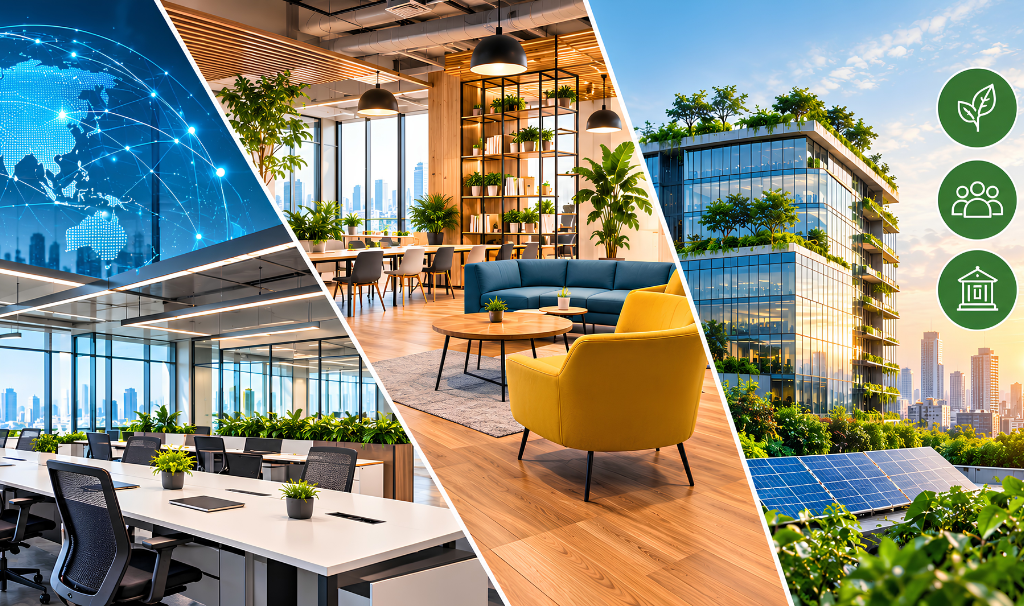
India’s office market is entering a new phase as businesses rethink how, where, and why they use commercial workspaces. The workplace is no longer viewed simply as a physical location for employees to sit and work. Companies are increasingly looking for spaces that support productivity, collaboration, employee experience, technology, sustainability, and long-term business growth.
From Global Capability Centres (GCCs) and flexible workspaces to sustainable buildings and high-quality corporate developments, several trends are shaping the future of office space in India. As businesses expand and workplace expectations evolve, understanding these changes can help occupiers make more informed real estate decisions.
1. GCCs are Reshaping India’s Office Market:- Global Capability Centres have become an important driver of commercial office demand in India. International companies are increasingly establishing or expanding their technology, finance, analytics, engineering, research, and business-support operations in Indian cities.
This growth is influencing both the quantity and quality of office space being sought by occupiers.
Key factors driving GCC expansion include:
- Access to skilled talent
- Established technology and business ecosystems
- Cost efficiencies
- Availability of modern commercial developments
- Strong connectivity and infrastructure
- Growing opportunities for innovation and specialised functions
Cities such as Bengaluru, Hyderabad, Chennai, Delhi-NCR, Mumbai, Pune, and other emerging business destinations continue to attract corporate occupiers.
For landlords and developers, this means office buildings need to offer more than adequate floor space. They must increasingly support technology infrastructure, employee amenities, efficient layouts, security, sustainability, and scalability.
2. Office Space is Becoming More Flexible:- One of the most significant office space trends in India is the growing demand for flexibility. Businesses today may experience rapid expansion, changing workforce requirements, hybrid working models, or project-based teams.
Traditional long-term office arrangements may not always provide flexibility required by modern businesses. As a result, companies are exploring options such as:
- Flexible workspaces
- Managed offices
- Coworking spaces
- Plug-and-play offices
- Customised office solutions
- Hybrid workplace models
Flexibility does not necessarily mean moving away from conventional offices. Instead, many businesses are adopting a combination of traditional leased offices and flexible workspace solutions.
For growing companies, this approach can provide additional capacity without requiring an immediate commitment to a much larger permanent office.
3. Grade A Offices are Gaining Importance:- The demand for Grade A office space in India is closely linked to the changing expectations of corporate occupiers. Businesses increasingly want workplaces that provide better infrastructure, professional environments, employee amenities, and operational efficiency.
Grade A buildings can offer features such as:
- Modern building infrastructure
- Efficient floor plates
- High-quality common areas
- Advanced security systems
- Reliable power and connectivity
- Parking facilities
- Food and lifestyle amenities
- Better building management
- Sustainability-focused features
For large enterprises and GCCs in particular, building quality can influence employee experience as well as the company's corporate image.
However, the right office is not necessarily the newest or most expensive property. Businesses still need to evaluate location, occupancy costs, accessibility, building quality, operational requirements, and future expansion plans before making a decision.
4. ESG is Becoming Part of Workplace Strategy:- Sustainability is moving from a corporate responsibility discussion into an important real estate consideration. ESG in commercial real estate is influencing how companies evaluate buildings, workplace design, energy consumption, and long-term operational efficiency.
Businesses are increasingly considering factors such as:
- Energy-efficient building systems
- Natural lighting and ventilation
- Water conservation
- Waste management
- Sustainable materials
- Indoor environmental quality
- Green building certifications
- Employee wellbeing
The workplace itself can also support wider sustainability objectives. Efficient lighting, smart HVAC systems, responsible material selection, and energy-monitoring technologies can contribute to more efficient office operations.
As ESG expectations continue to evolve, sustainability may become an increasingly important consideration during office selection, leasing, fit-outs, and workplace planning.
5. Technology is changing the Workplace Experience:- Technology is becoming an integral part of modern office environments. From smart access systems to connected meeting rooms, businesses are looking for workplaces that can support seamless digital operations.
Smart office solutions may include:
- Digital access and visitor management
- Smart lighting controls
- Automated HVAC systems
- Occupancy monitoring
- Technology-enabled meeting rooms
- Workplace management platforms
- High-speed digital infrastructure
The objective is not simply to add technology to an office. Instead, businesses need to identify technologies that solve practical workplace challenges and improve employee experience and operational efficiency.
This is particularly relevant for companies adopting hybrid working models, where office occupancy may fluctuate throughout the week.
6. Location Still Matters:- Despite the rise of technology and flexible working, location remains one of the most important factors in commercial real estate decisions.
Businesses need to consider how easily employees, clients, and visitors can access the workplace. Connectivity to major roads, public transport, airports, residential areas, and business hubs can influence both employee convenience and business operations.
When evaluating an office location, companies should consider:
- Employee accessibility
- Public transport connectivity
- Road connectivity
- Proximity to residential catchments
- Availability of amenities
- Parking
- Business ecosystem
- Future development potential
This is also creating opportunities for emerging commercial locations that can provide better accessibility or cost advantages compared with established business districts.
7. The Workplace will be designed around People:- The modern office is increasingly becoming a destination for collaboration, innovation, and employee interaction rather than simply a place to perform individual tasks.
Companies are therefore exploring workplace designs that include:
- Collaborative zones
- Meeting and brainstorming spaces
- Quiet work areas
- Informal seating
- Employee lounges
- Wellness spaces
- Cafeterias and breakout areas
The goal is to create a workplace that accommodates different working styles while encouraging employees to use the office meaningfully.
This shift is likely to influence both office layouts and the way businesses evaluate commercial properties in the coming years.
What Businesses should consider when selecting an Office?
As the workplace evolves, businesses need to look beyond rent and carpet area. A more comprehensive evaluation can help companies select spaces that align with both current and future requirements.
Important considerations include:
- Location and connectivity
- Total occupancy cost
- Workspace size and efficiency
- Building quality
- Amenities and infrastructure
- Lease terms and flexibility
- Employee accessibility
- Technology requirements
- Sustainability considerations
- Future expansion needs
A data-driven approach can help businesses compare different properties based on their specific operational priorities rather than relying only on listings or initial impressions.
Conclusion:-
The future of office space in India is being shaped by a combination of GCC expansion, flexible work models, sustainability, technology, and rising expectations for high-quality workplaces. At the same time, location, accessibility, cost, and long-term business requirements will continue to influence office decisions.
For businesses, the key is to view office space as a strategic business asset rather than simply a real estate expense. The right workplace should support employees, business operations, brand requirements, and future growth.
With expertise across office leasing, workplace planning, commercial property advisory, and execution, FirstLease helps businesses evaluate and plan their commercial real estate requirements with a long-term, client-centric approach.
FAQs
1. What is the future of office space in India?
The future of office space in India is expected to focus on flexibility, technology, sustainability, employee experience, and high-quality commercial infrastructure.
2. How are GCCs influencing office space demand in India?
GCC expansion is increasing demand for well-connected, technology-enabled, and scalable office spaces that can support large and specialised teams.
3. Why is flexible office space becoming popular in India?
Flexible office spaces allow businesses to adapt their workspace according to changing team sizes, hybrid work models, expansion plans, and operational requirements.
4. Why is ESG important in commercial real estate?
ESG considerations can help businesses address energy efficiency, resource consumption, employee wellbeing, sustainability goals, and long-term operational efficiency.
5. What should businesses consider when selecting Grade A office space?
Businesses should evaluate location, connectivity, occupancy costs, building quality, amenities, technology infrastructure, lease terms, employee accessibility, and future expansion needs.